
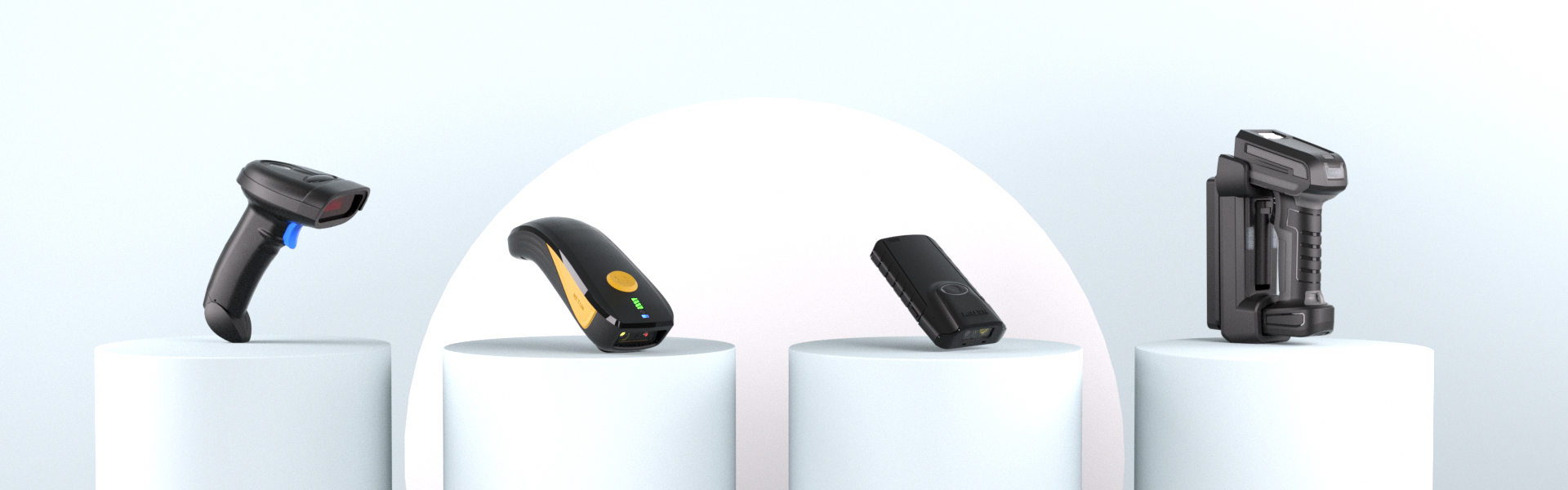
In the fast-paced world of retail, warehousing, and logistics, a reliable barcode scanner is a game-changer for streamlining operations. While 1D barcode scanners have long been a staple for basic data capture, 2d barcode scanner models have emerged as a versatile solution for handling complex, high-capacity data needs. Today, we break down the key differences between 1D and 2D barcode scanners, highlight the benefits of specialized options like barcode scanner wireless 2d, bluetooth barcode scanner 2d, and handheld 2d barcode scanner, and help you pick the perfect device for your business.
Key Features of 1D and 2D Barcode Scanners
1D Barcode Scanners: The Classic Choice
1D barcode scanners read linear barcodes made up of parallel lines of varying widths, which encode basic information like product SKUs, prices, and batch numbers. These scanners are typically affordable, lightweight, and easy to use, making them ideal for small businesses or environments with simple scanning needs. They work best with printed barcodes and are widely used in grocery stores, convenience stores, and libraries for quick checkout or inventory checks. However, 1D scanners have a major limitation: they can only read data in one direction and cannot store large amounts of information.
2D Barcode Scanners: The Versatile Upgrade
2d barcode scanner devices are designed to read both 1D linear barcodes and 2D matrix codes (such as QR codes, Data Matrix, and PDF417). Unlike 1D barcodes, 2D codes store data vertically and horizontally, allowing them to hold thousands of characters—including text, URLs, images, and even product specifications. This makes 2D scanners indispensable for industries that require detailed data capture, such as healthcare (patient wristbands), manufacturing (product traceability), and e-commerce (shipping labels with tracking information).
Among the most popular 2D scanner variants are barcode scanner wireless 2d and bluetooth barcode scanner 2d models, which eliminate the hassle of tangled cords and allow users to move freely around large warehouses or retail floors. handheld 2d barcode scanner devices take this flexibility a step further, offering ergonomic designs that reduce hand fatigue during long scanning shifts and are compatible with mobile devices for real-time data syncing.
Core Differences Between 1D and 2D Barcode Scanners
To help you understand the gap between these two technologies, here is a clear breakdown of their key attributes:
When it comes to data capacity, 1D barcode scanners only support basic linear data storage, which is enough for simple information like product prices or SKUs. On the contrary, 2d barcode scanner devices have high data capacity, capable of storing diverse content including text, images, URLs and more complex product details.
In terms of barcode compatibility, 1D scanners are limited to reading only 1D linear barcodes and cannot recognize any 2D matrix codes. Meanwhile, 2D scanners have strong compatibility, supporting both 1D linear barcodes and various 2D codes such as QR codes and Data Matrix codes.
For scanning flexibility, 1D scanners require a direct line-of-sight with the barcode and can only scan in one fixed direction, which restricts their usage scenarios. 2D scanners are more flexible—they can scan codes from any angle and work well with both printed barcodes and digital codes displayed on smartphone screens.
Regarding specialized variants, 1D scanners have a limited selection, mostly restricted to wired handheld models. 2D scanners, however, offer a rich variety of options, including barcode scanner wireless 2d, bluetooth barcode scanner 2d, handheld 2d barcode scanner and fixed-mount models, which can meet diverse business needs.
In terms of cost, 1D barcode scanners are budget-friendly and suitable for small businesses with limited funds. 2D scanners have a slightly higher price point, but they come with premium features that can handle complex data capture tasks.
How to Choose Between 1D and 2D Barcode Scanners
The decision between a 1D and 2D barcode scanner boils down to your specific business needs, scanning environment, and data requirements. Here’s a step-by-step guide to making the right choice:
Step 1: Evaluate Your Data Needs
If your operations only require scanning basic barcodes (e.g., product prices, SKUs for retail checkout), a 1D scanner is sufficient and cost-effective. However, if you need to capture detailed data—such as serial numbers, batch dates, or shipping information—or scan digital codes from smartphone screens (e.g., mobile payments, event tickets), a 2d barcode scanner is the better option. For maximum mobility, opt for a barcode scanner wireless 2d or bluetooth barcode scanner 2d model to sync data to your devices without cords.
Step 2: Consider Your Work Environment
In fast-paced environments like warehouses or distribution centers, where workers need to move around frequently, a handheld 2d barcode scanner is ideal. Its ergonomic design ensures comfort during long hours, while wireless connectivity allows for real-time inventory updates. For stationary setups like checkout counters, a fixed-mount 2D scanner may be more efficient. If your team works in areas with no power outlets nearby, a bluetooth barcode scanner 2d with long battery life is a must-have.
Step 3: Balance Cost and Value
1D scanners are cheaper upfront, making them a great choice for small businesses with tight budgets. However, 2D scanners offer long-term value by supporting a wider range of applications and adapting to future business growth. Investing in a barcode scanner wireless 2d or handheld 2d barcode scanner can reduce operational downtime and improve productivity, offsetting the initial cost over time.
Final Verdict
1D barcode scanners are perfect for simple, low-data scanning tasks, while 2d barcode scanner models are the go-to for businesses that need versatility, high data capacity, and mobility. Whether you choose a barcode scanner wireless 2d, bluetooth barcode scanner 2d, or handheld 2d barcode scanner, the key is to match the device to your unique operational needs. By understanding the differences between these two technologies, you can make an informed decision that boosts efficiency and drives business success.