
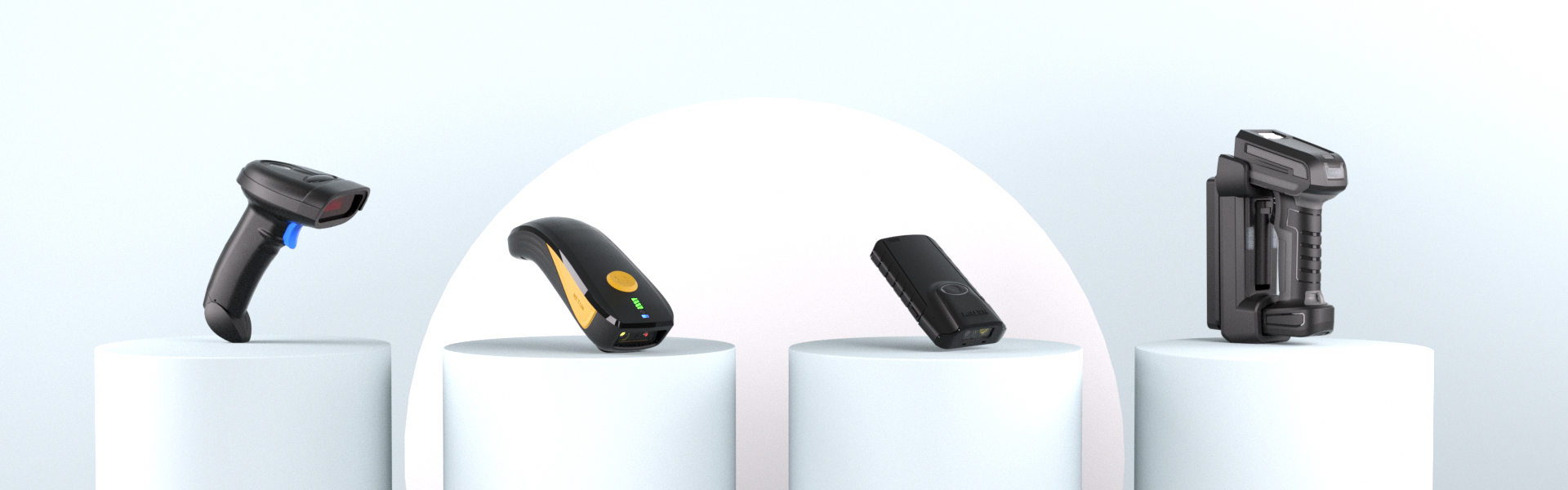
Cold storage facilities (including refrigerated warehouses, frozen food depots, and pharmaceutical cold chains) operate in extremely low-temperature environments, imposing stringent requirements on equipment performance. As core tools for inventory management, order processing, and traceability,cold storage barcode scanners cannot use standard commercial models. This 2026 buyer’s guide will analyze the necessity, core features, top recommendations, and maintenance tips of specialized low temperature resistant barcode scanners, helping you select suitable equipment to improve efficiency and reduce operational risks.
Why Cold Storage Requires Specialized Barcode Scanners
Standard barcode scanners are designed for room-temperature environments (20℃-25℃) and are prone to malfunctions in cold storage ranging from -10℃ to -30℃: low temperatures cause a sharp drop in battery capacity, fogging and frosting on scanning windows, brittleness of components, and circuit failures. In addition, staff need to wear thick gloves, making glove-friendly barcode scanners a must, and metal shelves and insulation materials may interfere with signals of wireless barcode scanners for frozen warehouses. Specialized scanners solve these problems through targeted design, ensuring uninterrupted data collection in harsh environments. Using standard equipment can easily lead to order delays, inventory discrepancies, equipment downtime, and rising maintenance costs.
Core Features of High-Quality Cold Storage Barcode Scanners
3.1 Temperature Resistance and Heated Components
Low temperature resistant barcode scanners must withstand continuous operating temperatures from -25℃ to 5℃. High-end models are equipped with heated window barcode scanners and internal components to prevent condensation and frost from blocking signals; chips, circuits, and other parts use low-temperature-resistant materials to avoid performance degradation or shutdowns in extreme cold<superscript:4>.
3.2 Rugged Design and Impact Resistance
Cold storage floors are slippery, making equipment prone to drops, so military-grade rugged design is essential for cold storage barcode scanners. It is recommended to choose models with TPU-PC rugged barcode scanners casings that can withstand drops of over 1.5 meters onto concrete and have an IP54+ dust and water resistance rating. TPU+PC composite reinforced casings can resist impacts and low-temperature brittleness<superscript:3superscript:6>.
3.3 Anti-Fog/Frost-Resistant Scanning Window
When equipment switches between cold storage and room temperature, condensation easily forms, and frost may occur in ultra-low temperatures. Anti-fog coatings and heated windows maintain clear visibility, ensuring stable scanning performance without frequent manual cleaning or workflow interruptions.
3.4 Battery Performance in Low-Temperature Conditions
Lithium-ion batteries lose 30%-50% of their capacity at -20℃. High-quality cold storage scanners must be equipped with high-capacity low-temperature-resistant batteries of 450mAh or more and support fast charging. Some models offer hot-swappable batteries or an ultra-long standby time of over 30 days to avoid workflow interruptions<superscript:3>.
3.5 Glove-Friendly Operation
To accommodate staff wearing thick insulated gloves, scanners need large tactile buttons or contactless triggers. Adjustable scanning sensitivity and one-handed operation design reduce fatigue, enabling precise operation without removing gloves, balancing warmth and safety.
3.6 Wireless Connectivity and Compatibility
Bluetooth barcode scanners for cold storage with BLE/SPP protocols and a transmission distance of ≥30 meters are suitable for large cold storage facilities. Equipment must resist signal interference from metal structures, seamlessly integrate with WMS, ERP, and inventory management systems, and be compatible with Windows, Android, and iOS systems to adapt to multi-scenario operations<superscript:3>.
3.7 Scanning Speed and Accuracy
Cold storage operations demand high efficiency—scanners must achieve a scanning speed of over 200 scans per second and be compatible with 1D (EAN, UPC, Code 128) and 2D (QR Code, Data Matrix, PDF417) barcodes. Advanced AI decoding algorithms can recognize damaged, wrinkled, and frosted barcodes, reducing misread rates and ensuring smooth workflows<superscript:2superscript:4>.
Top Recommended Cold Storage Barcode Scanners in 2025
4.1 Handheld Barcode Scanners
4.1.1 Core Advantages
Handheld scanners are full-featured, easy to operate, and cost-effective, with strong scanning performance and ruggedness. Suitable for multiple cold storage tasks such as picking, packing, and inventory checking, they are the preferred choice for small and medium-sized cold storage facilities.
4.1.2 Cold Storage Application Scenarios
Compatible with refrigerated areas (-10℃) and frozen areas (-20℃), they can scan pallets, cartons, and individual items. The ergonomic design reduces fatigue during long-hour operations, and wireless models eliminate cable constraints, adapting to large warehouse operations.
4.1.3 Recommended Model
NETUM GY Series Handheld Barcode Scanner: The preferred low temperature resistant barcode scanner for cold storage, balancing ruggedness and high performance. As a glove-friendly barcode scanner, its battery maintains 80% capacity at -20℃, and the heated anti-fog window effectively prevents frosting; IP65 protection and 2-meter drop resistance make it suitable for harsh environments. With a scanning speed of 200 scans per second, it supports 1D/2D barcodes (including damaged and low-contrast barcodes), and Bluetooth 5.0 ensures stable 30-meter signal transmission as a reliable wireless barcode scanner for frozen warehouses. The ergonomic grip is suitable for long-hour work, compatible with WMS systems for real-time data synchronization, and available in wired and wireless versions to adapt to different cold storage layouts.
4.2 Wearable Barcode Scanners (Ring/Glove Style)
4.2.1 Core Advantages
Wearable barcode scanners for cold storage (ring/glove-style) free up both hands, improving cold storage operation efficiency. Weighing ≤65g, they are comfortable and durable to wear, reducing the risk of equipment drops, supporting hands-free scanning, and serving as efficient tools for loading, unloading, and packing.
4.2.2 Cold Storage Application Scenarios
Suitable for high-throughput picking, order verification, and pallet handling in frozen areas (-25℃). Staff can scan while handling goods, opening/closing doors, and operating forklifts, reducing low-temperature exposure time and improving work efficiency. The compact design does not interfere with the wearing of protective equipment.
4.2.3 Recommended Model
NETUM RF Wearable Ring Barcode Scanner: A top-tier wearable barcode scanner for cold storage specifically designed for extreme low-temperature environments, it is the first choice for hands-free operations. The TPU-PC rugged barcode scanner casing (stronger than ABS+PC) resists low-temperature brittleness and can withstand 1.5-meter drops. The 450mAh low-temperature-resistant battery supports 8 hours of continuous work at -20℃ and 30 days of standby, with a multi-functional base supporting 2-hour fast charging (also serving as a Bluetooth adapter). As a high-performance bluetooth barcode scanner for cold storage, it supports HID/SPP/BLE protocols with a 30-meter transmission distance, and can recognize all types of 1D/2D barcodes (including frosted and wrinkled labels). The 65g lightweight design fits most finger sizes, the contactless trigger is compatible with thick gloves, and it supports Windows/Android systems with SDK for customized integration with cold storage management software, adapting to high-efficiency picking lines.
| Scanner Type | Core Advantages | Best Cold Storage Application Scenarios | Temperature Resistance Range | Recommended Model |
| Handheld | Cost-effective, full-featured, easy to maintain | General inventory management, carton scanning | -20℃ to 5℃ | NETUM GY Series |
| Wearable (Ring) | Hands-free, lightweight, high-efficiency | Picking, packing, loading and unloading | -25℃ to 5℃ | NETUM RF Wearable Ring Barcode Scanner |
5.1 Selection Methods
When selecting a cold storage barcode scanner, focus on five key points: 1) Temperature Adaptation: Match the operating temperature of refrigerated/frozen areas; 2) Operation Scenarios: Choose wearable scanners for hands-free needs and handheld scanners for general scenarios; 3) Connectivity Performance: Ensure wireless transmission distance and system compatibility; 4) Battery Life: Prefer long-lasting or hot-swappable batteries; 5) Durability: IP protection and drop resistance ratings should adapt to the cold storage environment. Most cold storage facilities choose the NETUM RF Wearable Scanner (for picking) and GY Series (for inventory), balancing cost-effectiveness and performance.
Cold Storage Scanner Maintenance Tips for Industrial Barcode Scanners
6.1 Cleaning and Condensation Prevention
Clean the scanning window daily with a lint-free cloth dipped in 50% isopropyl alcohol (avoid corrosive solvents to prevent damage to the anti-fog coating)<superscript:1>. When switching equipment between temperature zones, place it in a sealed bag and let it acclimate for 30 minutes to prevent condensation. Regularly wipe the casing and interfaces to remove dust and frost, and check for water ingress in the wireless charging port.
6.2 Regular Calibration and Updates
Calibrate scanners with standard test cards monthly, especially after extreme temperature changes<superscript:1superscript:5>. Download the latest firmware and drivers from official websites of brands like NETUM to optimize low-temperature performance and fix compatibility issues; update drivers and management software regularly to ensure smooth data synchronization.
6.3 Proper Storage Specifications
When not in use, store scanners in a dry, constant-temperature environment (10℃-20℃) and avoid leaving them in cold storage overnight<superscript:5>. Use original charging accessories and store spare batteries separately in a warm place. For long-term storage, charge the battery to 50% and recharge it every 3 months to prevent cell aging.
6.4 Optimizing Staff Training
6.4.1 Core Training Content
Train staff to master proper equipment operation (drop prevention), condensation prevention, and battery management methods, and learn to quickly handle common faults such as window frosting and weak signals. Simultaneously train on system integration operations, including WMS data synchronization, troubleshooting, and offline mode use; for NETUM equipment, explain the dual functions of the multi-functional base (charging and Bluetooth adaptation).
6.4.2 Core Value of Training
Standardized training can reduce equipment maintenance costs by over 30%<superscript:1>, improve scanning accuracy, reduce inventory errors, and shorten fault downtime. Properly maintained equipment can have a service life of 7-8 years, far exceeding the 3-4 years of improperly operated equipment<superscript:1>.
Selecting a suitable cold storage barcode scanner is crucial for improving operational efficiency and stability. The NETUM RF Wearable Ring Barcode Scanner and NETUM GY Series Barcode Scanner stand out as premium low temperature resistant barcode scanners for their targeted low-temperature design and rugged quality, helping cold storage facilities optimize processes and control costs. Following the feature requirements and maintenance specifications in this guide allows you to accurately select equipment suitable for 2026 and future needs.