
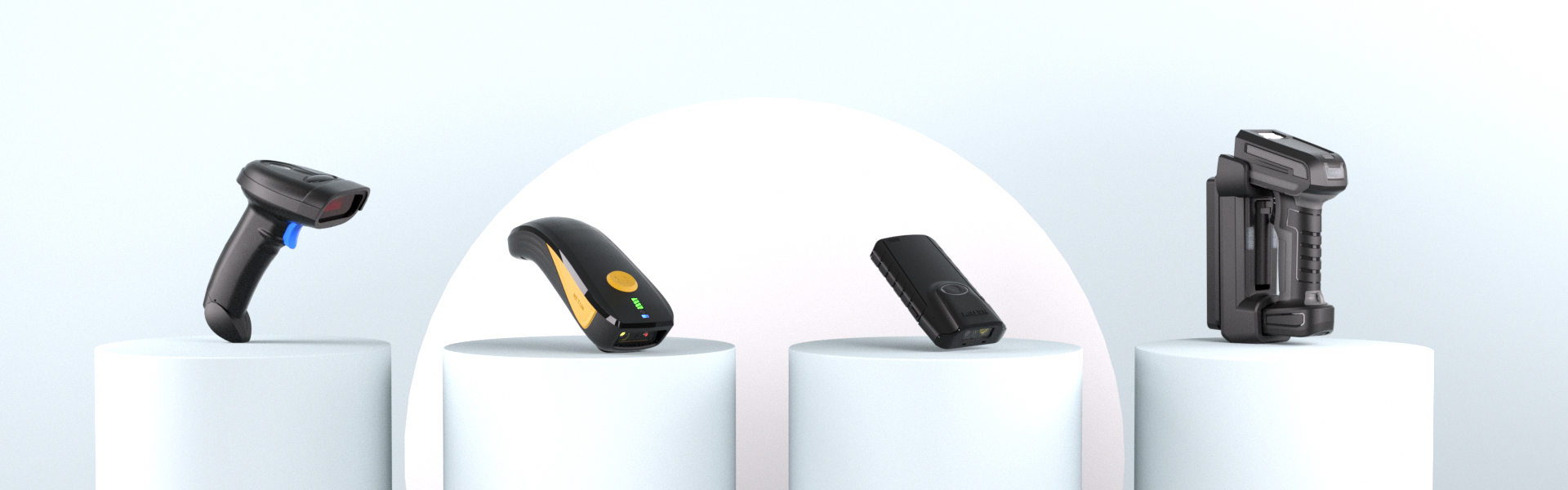
In the fast-paced warehousing and logistics industry, every second counts. As a core link in the supply chain, picking operations directly affect the efficiency of the entire logistics system and customer satisfaction. With the continuous advancement of technology, wearable barcode scanners have emerged as game-changers that subvert traditional picking models. Whether it is wireless wearable barcode scanners, bluetooth wearable barcode scanners, wifi wearable barcode scanners, or the latest new wearable barcode scanners, these devices are redefining the standards for efficient picking. This article will delve into the basics of wearable barcode scanners, their working principles, the pain points of traditional picking, how wearable barcode scanners solve these problems, and focus on how NETUM RF wearable barcode scanners improve efficiency.
Basics of Wearable Barcode Scanners
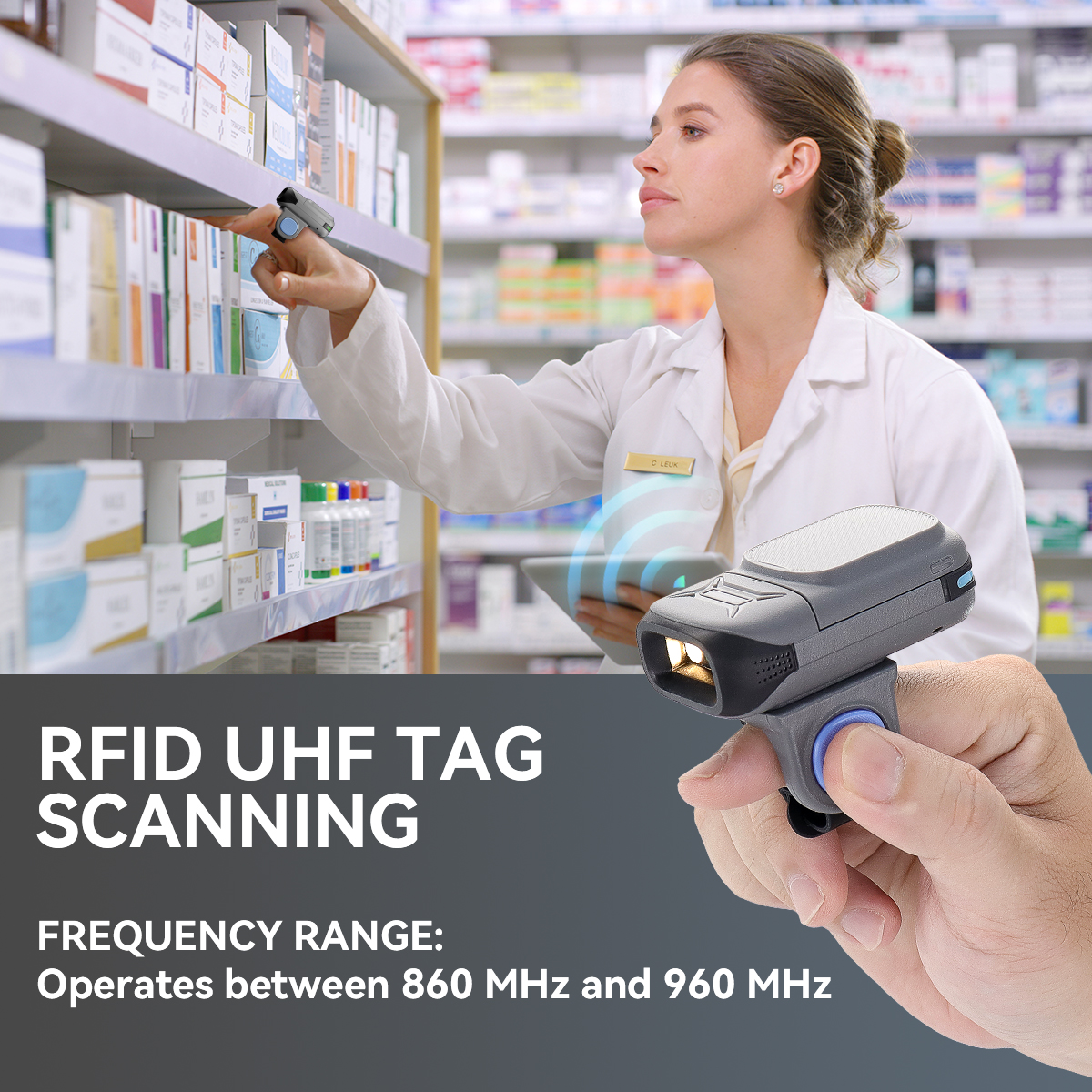
A wearable barcode scanner is a portable scanning device designed to be worn on the body, such as on the wrist, finger, or arm. Unlike traditional handheld scanners, it can free the user's hands, allowing them to perform other tasks simultaneously, which is particularly useful in picking operations. According to different wireless communication technologies, wearable barcode scanners are mainly divided into several categories: bluetooth wearable barcode scanners, wifi wearable barcode scanners, and other variants of wireless wearable barcode scanners. The latest new wearable barcode scanners are lighter, more durable, and have longer battery life, enabling them to adapt to the harsh and dynamic warehousing environment.
This type of scanner is compatible with various barcode types, including 1D and 2D barcodes, and can quickly and accurately capture barcode information. They are widely used in many industries such as warehousing, logistics, retail, and manufacturing, and are especially suitable for links such as picking, packaging, sorting, and inventory checking.
Working Principle of Wearable Barcode Scanners
The working principle of a wearable barcode scanner is similar to that of a traditional barcode scanner, but it has been optimally designed for wearable scenarios. First, the scanner emits a light source (usually a laser or LED) to illuminate the barcode. A barcode is composed of black and white bars of different widths, which reflect light to different degrees. The photoelectric sensor of the scanner captures the reflected light and converts it into an electrical signal. Subsequently, the decoder inside the scanner decodes the signal into digital information recognizable by computers or mobile devices.
For wireless wearable barcode scanners (such as bluetooth wearable barcode scanners and wifi wearable barcode scanners), the decoded information is transmitted wirelessly to connected devices (such as Warehouse Management System, WMS) in real time. This wireless transmission method eliminates the need for cumbersome cables, allowing staff to move freely in the warehouse without being restricted by cable length. New wearable barcode scanners usually adopt advanced decoding algorithms and high-sensitivity sensors, which improve scanning speed and accuracy, and can easily recognize even damaged or blurred barcodes.
Pain Points of Traditional Picking
Traditional picking operations mainly rely on handheld barcode scanners or manual recording, which have many pain points that seriously hinder efficiency improvement and increase costs.
First of all, handheld scanners require staff to hold them with one hand, making it difficult to carry goods, open boxes, or operate other tools at the same time. This frequent switching between holding the scanner and performing other tasks wastes a lot of time and reduces picking speed.
Secondly, the cables of wired handheld scanners limit the movement range of staff and may become tangled with goods or equipment, causing delays and even potential safety hazards. Although wireless handheld scanners get rid of cable constraints, they still need to be held by staff, failing to truly free their hands.
Thirdly, manual recording or slow scanning leads to low data accuracy, and picking errors (such as picking wrong goods or incorrect quantities) occur frequently, requiring rework and increasing operating costs. In addition, the data transmission of traditional scanners is often not real-time, resulting in delayed inventory updates and making it difficult for managers to monitor picking progress in real time.
Fourthly, long-term use of handheld scanners can cause fatigue in staff's arms and shoulders, affecting work efficiency and employee satisfaction.
How Wearable Barcode Scanners Solve These Problems
With its unique design and advanced functions, wearable barcode scanners effectively solve the pain points of traditional picking, making picking faster and easier.
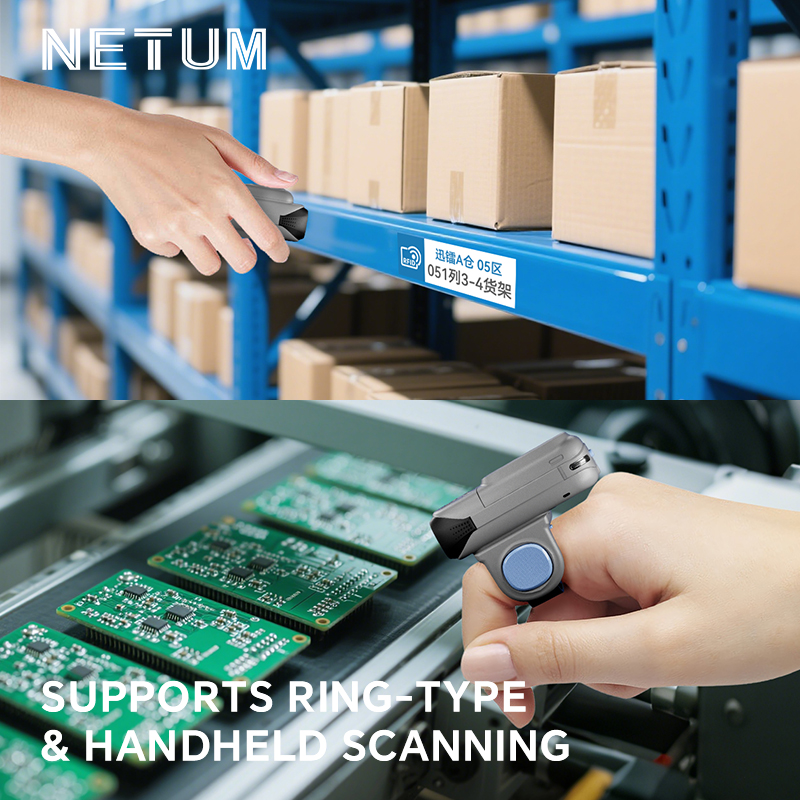
Its most significant advantage is freeing staff's hands. Wearable barcode scanners worn on the wrist or finger allow staff to carry goods, open packages, or operate other tools with both hands, eliminating the time waste caused by switching between holding the scanner and other tasks, and greatly improving picking speed and efficiency.
For wireless wearable barcode scanners (such as bluetooth wearable barcode scanners and wifi wearable barcode scanners), the wireless transmission function allows staff to move freely in the warehouse without being restricted by cables. This not only improves work flexibility but also reduces the risk of cable tangling and the probability of safety accidents.
The advanced decoding technology of wearable barcode scanners ensures high scanning accuracy and speed. Even damaged, blurred, or small barcodes can be quickly and accurately captured, reducing picking errors and rework costs. In addition, real-time data transmission enables the warehouse management system to update inventory information immediately, allowing managers to monitor picking progress in real time, adjust work plans in a timely manner, and improve overall operational efficiency.
At the same time, the lightweight ergonomic design of wearable barcode scanners reduces the physical burden on staff, reduces work fatigue, and improves employee satisfaction and retention rate.
How NETUM RF Wearable Barcode Scanners Solve These Problems and Improve Efficiency
As a leading provider of barcode scanning solutions, NETUM's RF wearable barcode scanners stand out in the market with their excellent performance and user-friendly design. They not only solve the pain points of traditional picking but also further improve efficiency, bringing tangible benefits to enterprises.
NETUM RF wearable barcode scanner is a high-performance wireless wearable barcode scanner that supports dual wireless communication modes of bluetooth and wifi. This dual-mode design ensures stable and fast data transmission and can adapt to different warehousing environments. Whether it is a large warehouse with complex terrain or a small logistics center, it can maintain smooth communication with the warehouse management system to ensure real-time data synchronization.
As a new wearable barcode scanner, it adopts the latest decoding chip and high-sensitivity image sensor, with a scanning speed of up to 300 times per second for 1D and 2D barcodes. Even barcodes with scratches, stains, or printed on curved surfaces can be accurately decoded, with a recognition rate of over 99.9%. This high accuracy and speed significantly reduce picking errors and improve work efficiency.
The ergonomic design of NETUM RF wearable barcode scanner is another major highlight. It weighs only 50 grams and can be worn on the wrist or finger, fitting closely to the human body without causing discomfort even after long-term use. The one-click scanning design allows staff to complete scanning with a light press, further simplifying the operation process.
In addition, NETUM RF wearable barcode scanner has a long battery life. Equipped with a large-capacity rechargeable battery, it can work continuously for up to 12 hours on a single charge, meeting the needs of long working shifts in warehouses. The fast charging function can fully charge it in just 2 hours, reducing downtime.
The scanner also has high durability, reaching IP67 waterproof and dustproof level, and can withstand drops from a height of 1.5 meters, adapting to collisions and splashes common in warehousing environments. This durability reduces maintenance costs and ensures long-term stable operation.
By using NETUM RF wearable barcode scanners, enterprises can increase picking efficiency by 30%-50%, reduce picking error rate by more than 90%, and lower labor costs. At the same time, the improved working environment and reduced labor intensity increase employee satisfaction, laying a foundation for the long-term development of the enterprise.
Conclusion
In the era of rapid development of warehousing and logistics, wearable barcode scanners have become an essential tool for improving picking efficiency. Whether it is wireless wearable barcode scanners, bluetooth wearable barcode scanners, wifi wearable barcode scanners, or the latest new wearable barcode scanners, they all change the traditional picking mode with their unique advantages. In particular, NETUM RF wearable barcode scanners, with their excellent performance, stable wireless transmission, high accuracy, and humanized ergonomic design, provide a comprehensive solution for enterprises to solve picking pain points and improve operational efficiency.
If you want to make your picking operations faster and easier and gain an advantage in the fierce market competition, choosing NETUM RF wearable barcode scanners is a wise decision. Contact us now to learn more about our wearable barcode scanner products and solutions!