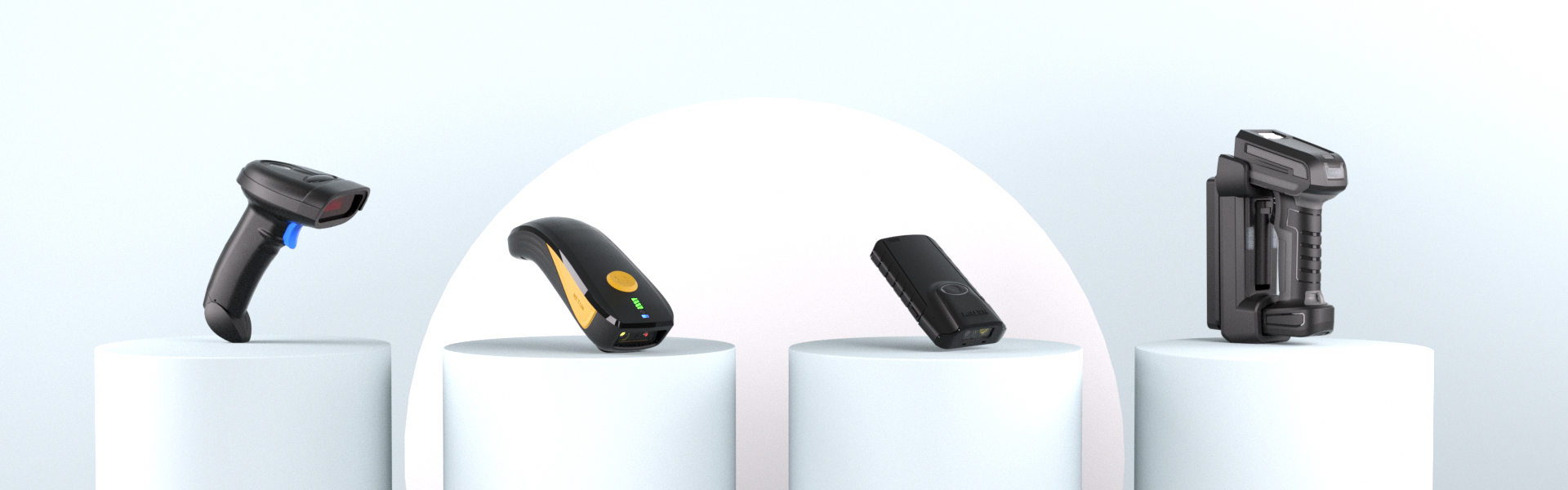
In today’s fast-paced business landscape, efficiency and adaptability are key to staying ahead—and the right barcode scanner plays a pivotal role in streamlining operations. The age-old debate persists: Is a 2D barcode scanner better than 1D? For businesses navigating retail, logistics, inventory management, or digital transformation, the answer hinges on understanding how each device performs across critical metrics. Below, we break down the differences between 1D barcode scanner and 2D barcode scanner, focusing on data capacity, compatibility, performance, cost, and applicability—while highlighting game-changing options like barcode scanner wireless 2D, 2D qr code scanner, and scanner 2d bluetooth. By the end, you’ll know exactly which scanner aligns with your business goals.
1. Data Capacity: 2D Barcode Scanners Unlock Limitless Possibilities
The core difference between a 1D barcode scanner and 2D barcode scanner starts with data storage. A 1D barcode scanner is designed for linear barcodes (e.g., UPC, EAN-13), which can only hold 20-25 characters—just enough for basic product IDs or prices. This limitation traps businesses in surface-level tracking, unable to capture critical details like batch numbers, expiration dates, supply chain origins, or customer data. For growing companies, this lack of depth becomes a bottleneck.
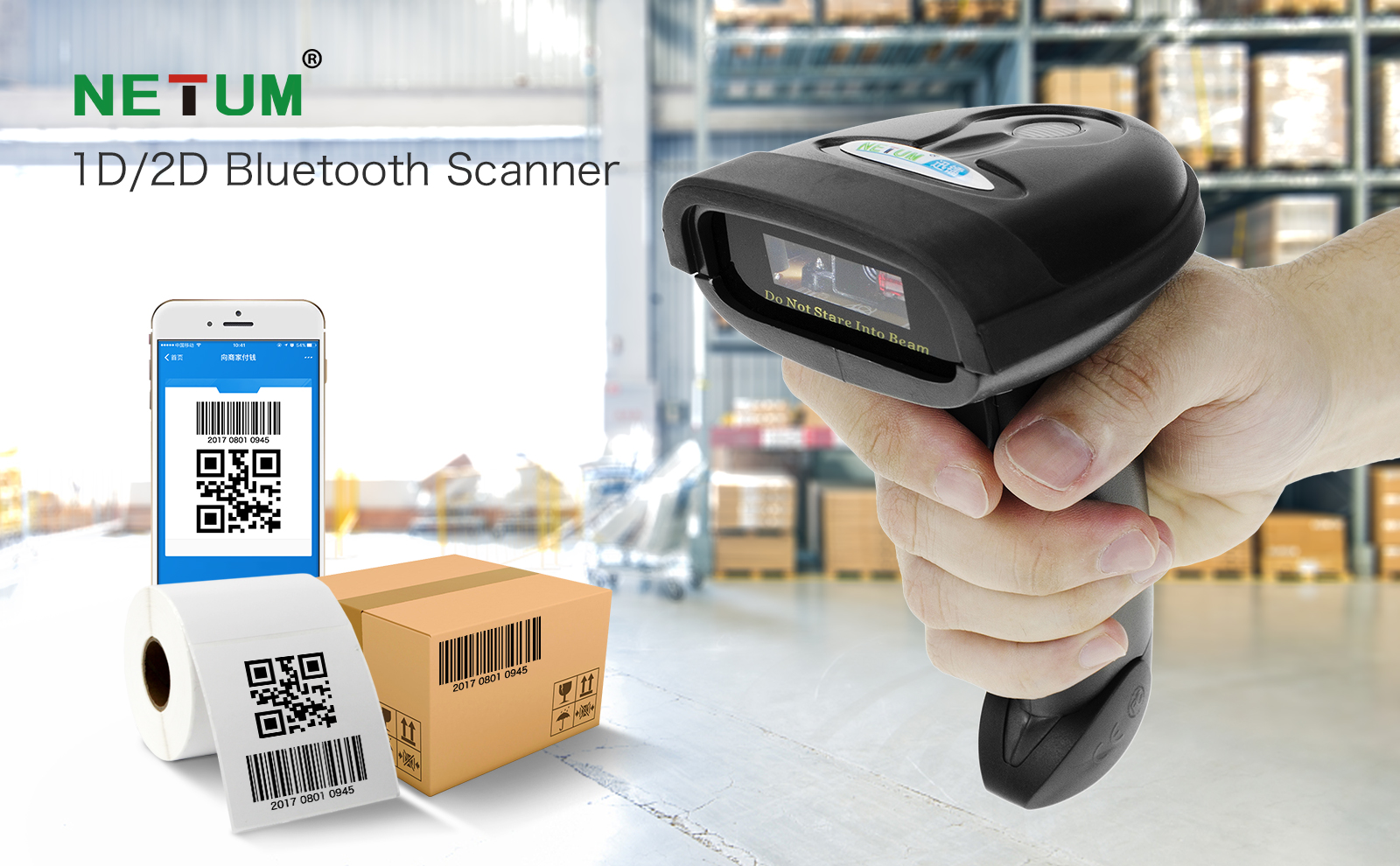
In contrast, a 2D barcode scanner (especially a 2D qr code scanner) leverages 2D codes (QR codes, Data Matrix, Aztec) to store up to 2,000 characters—enough to embed URLs, encrypted information, inventory notes, or even entire product manuals. Imagine a logistics team scanning a package and instantly accessing its full journey from warehouse to doorstep, or a retail store linking a product to a digital loyalty program via a QR code. With a 2D barcode scanner, you’re not just scanning a code—you’re unlocking a data ecosystem that drives smarter decisions. And with options like scanner 2d bluetooth, you can access this data wirelessly, keeping your team connected on the go.
2. Barcode Compatibility: 2D Scanners Are All-In-One Powerhouses
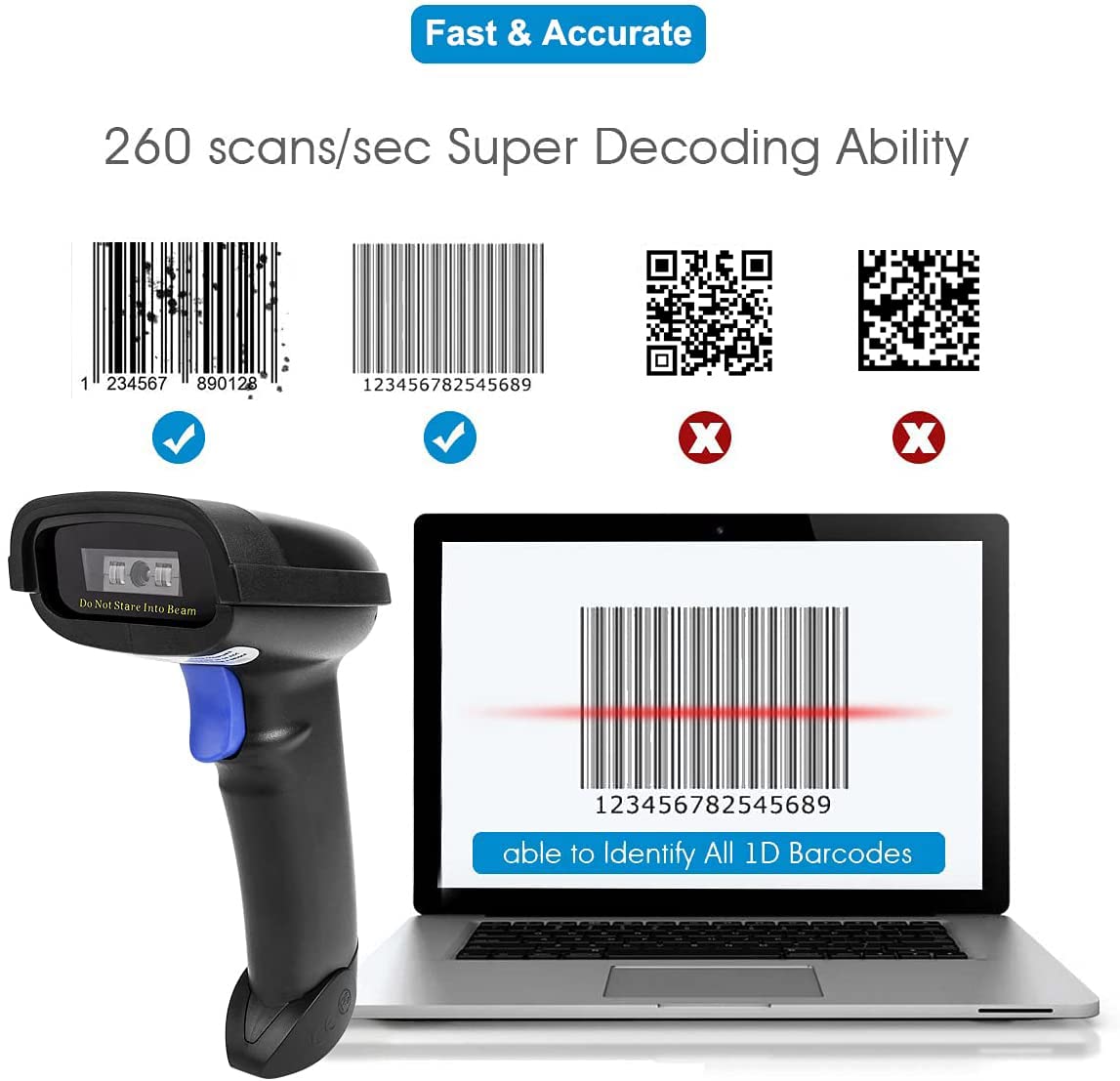
A 1D barcode scanner is a one-trick pony: it only reads 1D barcodes. If your business ever needs to scan 2D QR codes (e.g., mobile payments, digital receipts, or inventory Data Matrix codes), a 1D scanner becomes obsolete. This inflexibility is risky in a world where digital interactions are ubiquitous—think of a café turning away customers because their 1D scanner can’t process mobile payment QR codes.
2D barcode scanners eliminate this risk with universal compatibility. They read all 1D barcodes and every type of 2D code, including the widely used 2D QR code. The barcode scanner wireless 2D takes this further: it supports screen scanning, letting you read codes directly from smartphones, tablets, or computers—no need for physical labels. Whether you’re processing online orders, verifying digital tickets, or managing mixed inventory, a 2D barcode scanner adapts to your needs. For teams that need mobility, a scanner 2d bluetooth connects seamlessly to devices, ensuring you’re not tied to a desk. This versatility means you’ll never need to invest in multiple scanners again.
3. Scanning Performance: 2D Scanners Deliver Speed, Flexibility, and Reliability
When it comes to real-world usability, 2D barcode scanners outshine 1D models in every way. A 1D barcode scanner requires precise alignment: you must hold it close to the barcode (1-2 inches), at a straight angle, and the code must be clean, undamaged, and properly printed. This slows down workflows—think of a retail checkout line held up by a blurry 1D barcode, or a warehouse worker struggling to scan items on high shelves.
2D barcode scanners use advanced image recognition technology to solve these pain points. They scan from any angle (360 degrees!), at distances ranging from a few inches to 30 feet, and even read damaged, faded, or tiny barcodes. The barcode scanner wireless 2D enhances this flexibility: move freely around your store, warehouse, or factory without being constrained by cables. For busy environments, a 2D qr code scanner processes codes in milliseconds, cutting down on errors and downtime. And with scanner 2d bluetooth, you can pair with smartphones or tablets to sync data in real time, ensuring your team always has the latest information. Whether you’re scanning 10 items per minute or 100, a 2D barcode scanner keeps operations running smoothly.
4. Cost & Applicability: 2D Scanners Offer Long-Term Value
It’s true—2D barcode scanners have a slightly higher upfront cost than 1D models. But let’s talk about long-term value. A 1D scanner is a temporary fix: if your business expands, adopts digital tools, or needs to store more data, you’ll have to replace it with a 2D scanner eventually. Why waste money on a device that limits your growth?
2D barcode scanners are built for scalability, making them ideal for businesses of all sizes:
Retail: Process mobile payments (via 2D qr code scanner), track inventory with detailed data, and enhance customer experiences with digital links.
Logistics: Scan packages with complex tracking info from high shelves or moving conveyors—barcode scanner wireless 2D is a must for mobility.
Healthcare: Securely store patient records in 2D codes for fast, accurate access, with scanner 2d bluetooth enabling wireless sync to EHR systems.
Manufacturing: Track components with batch numbers and quality control data, even in harsh environments.
For small businesses, the investment pays off quickly: fewer errors mean less waste, faster workflows mean more sales, and universal compatibility means no future upgrades. For large enterprises, 2D barcode scanners integrate seamlessly with ERP and inventory management systems, driving efficiency at scale. And with options like scanner 2d bluetooth, you can reduce setup time and increase team productivity.
How to Choose: 1D vs. 2D Barcode Scanner
The choice boils down to your business needs:
Choose a 1D barcode scanner only if: You exclusively scan basic 1D barcodes for simple pricing (e.g., a small convenience store with no digital needs) and have a tight budget.
Choose a 2D barcode scanner if: You want to store detailed data, scan 2D QR codes or digital screens, work flexibly (wireless, long-distance, any angle), or grow your business without replacing hardware. Opt for barcode scanner wireless 2D or scanner 2d bluetooth for maximum mobility, or a dedicated 2D qr code scanner if QR codes are your primary focus.
Final Verdict: 2D Barcode Scanners Are the Future
So, is a 2D barcode scanner better than 1D? For businesses that want to stay competitive in a digital world, the answer is a resounding yes. 2D barcode scanners offer more data capacity, universal compatibility, superior performance, and long-term value that 1D scanners can’t match. Whether you choose a barcode scanner wireless 2D for mobility, a 2D qr code scanner for specialized QR code needs, or a scanner 2d bluetooth for seamless connectivity, you’re investing in a tool that adapts to your needs and drives growth.