
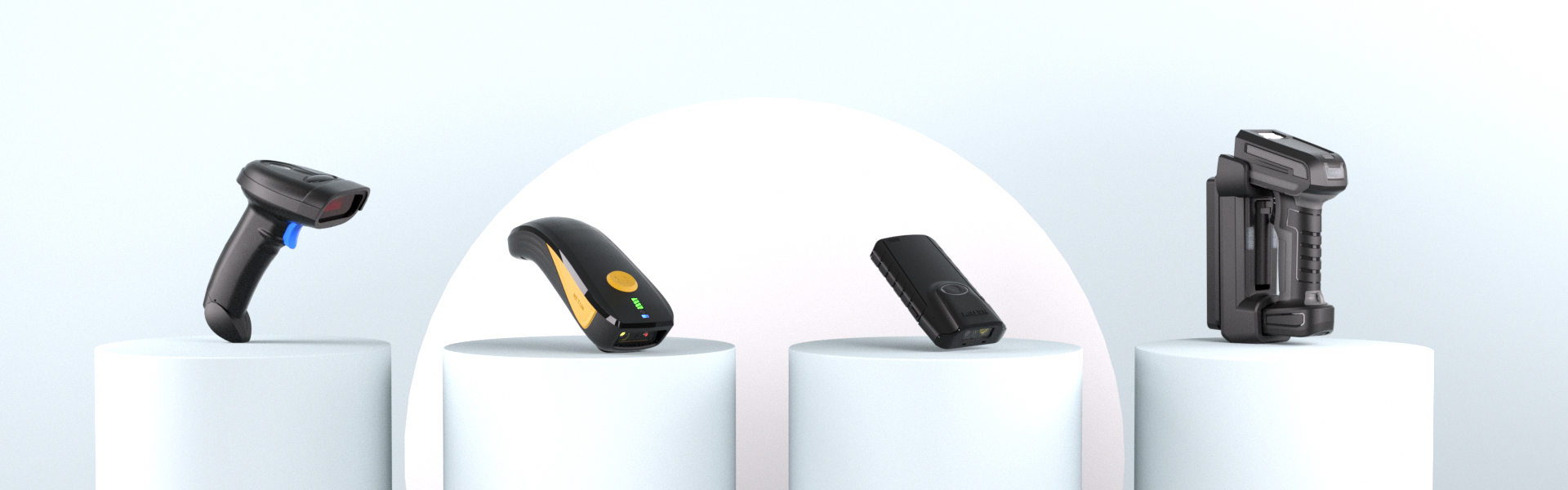
A reliable retail barcode scanner is essential for daily checkout, inventory counting, and shelf replenishment for supermarkets, convenience stores, apparel shops, and retail chains. As core POS hardware, barcode scanners directly determine checkout speed, staff efficiency, inventory accuracy, and overall customer shopping experience. However, many retailers still use traditional laser barcode scanners and low-cost 2D scanners that cause frequent scanning errors, unstable connections, slow decoding, and high maintenance costs, resulting in long checkout queues and hidden operational losses.
If you are looking for a high-performance POS barcode scanner to solve common retail scanning pain points, this SEO-optimized guide covers major barcode scanner problems, how NETUM barcode scanner fixes retail industry challenges, and key factors for choosing the best retail barcode scanner in 2026.
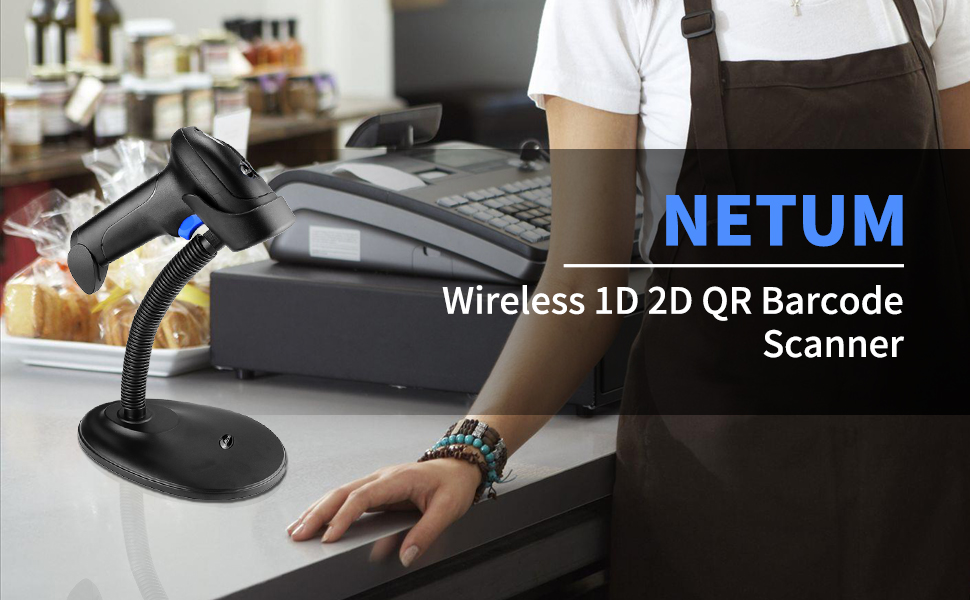
Major Barcode Scanner Pain Points in Retail Industry
Traditional wired and wireless barcode scanners cannot match modern high-frequency, multi-scenario retail operations. The following drawbacks are the main causes of low store efficiency and poor customer experience:
1. Low Scanning Accuracy & Poor Compatibility for Complex Barcodes
Most traditional laser scanners only read 1D barcodes and cannot support mobile payment QR codes on phone screens. Ordinary 2D barcode scanners struggle with wrinkled, faded, damaged, low-contrast commodity barcodes, as well as reflective screen codes. High scanning failure rates during peak hours lead to repeated scans and customer complaints.
2. Slow Decoding Speed Causes Checkout Queues
Standard retail barcode scanners feature slow decoding and delayed response. During rush hours and holidays, inefficient scanning prolongs single transaction time, creates long checkout queues, reduces customer satisfaction, and limits retail store sales turnover.
3. Unstable Connection & Poor System Adaptability
Generic wireless barcode scanners suffer from Bluetooth disconnection and data transmission delay, while wired scanners often have loose interfaces and tangled cables. Most scanners fail to plug and play with mainstream POS systems, retail software, Windows, Android, and iOS, requiring complicated driver installation and manual debugging.
4. Fragile Build & High Operational Maintenance Costs
Low-cost barcode scanners adopt inferior materials with poor drop resistance and wear resistance. Frequent device damage, battery aging, and short battery life lead to frequent replacement and after-sales maintenance, greatly increasing long-term retail operational costs.
5. Single Function Fails to Support Full-Scenario Retail Use
Conventional POS scanners only support checkout scanning, unable to handle warehouse inventory, batch commodity inspection, and shelf stocktaking. Retailers need multiple devices for different scenarios, increasing procurement costs and management difficulties. Missing scan and wrong scan issues also occur frequently due to unreasonable design.
How NETUM Barcode Scanner Solves Retail Industry Pain Points
As a professional manufacturer ofretail POS barcode scanners, NETUM focuses on actual retail operational needs. Our upgraded wired and wireless barcode scanners adopt industrial-grade decoding technology and durable hardware, solving all common scanning pain points for small shops, supermarkets, and retail chains with high efficiency and low cost.
1. 100% High Precision Scanning for All Complex Barcodes
NETUM 2D retail barcode scanner adopts industrial CMOS image sensor, supporting full recognition of 1D/2D barcodes, faded, damaged, low-contrast printed barcodes, and reflective mobile payment screen QR codes. It eliminates scanning blind spots caused by light changes and barcode defects, achieving nearly 100% scanning success rate.
2. 0.1s Ultra-Fast Decoding to Eliminate Checkout Queues
Equipped with high-speed decoding chip, NETUM POS scanners deliver instant response and continuous high-intensity scanning stability. It greatly shortens checkout time during peak hours, improves store transaction efficiency, and optimizes customer shopping experience.
3. Wide Compatibility & Plug and Play Stable Connection
All NETUM barcode scanners support Windows, Android, iOS and all mainstream retail POS systems and cash register software. With multi-protocol automatic switching and upgraded Bluetooth 5.3 wireless module, devices feature stable signal, long transmission distance, no disconnection or delay. Wired models adopt anti-winding and anti-loose design for frequent retail operations.
4. Industrial Durability & Low Long-Term Cost
NETUM retail scanners use high-strength ABS engineering materials with industrial drop-proof and wear-resistant performance. Wireless models are equipped with high-capacity long-life batteries for all-day continuous work. Low failure rate effectively reduces maintenance and replacement costs for retail businesses.
5. Multi-Scenario All-in-One Design for Full Retail Operations
NETUM all-in-one barcode scanners support checkout scanning, warehouse inventory, and batch commodity inspection. Equipped with sound, light and vibration reminders and lightweight body design, they avoid missed/wrong scans and reduce hand fatigue for long-hour work, greatly improving staff operational efficiency.
2026 Best Retail Barcode Scanner Buying Guide
To pick the best barcode scanner for retail, avoid blind low-price or over-spec purchases. Follow these practical standards based on your store scenarios:
1. Choose 2D Image Scanner for Full Payment & Barcode Support
All modern retail stores need a 2D barcode scanner to support both paper barcodes and phone screen QR code payments, ensuring stable decoding of damaged and faded commodity barcodes.
2. Select Wired/Wireless Scanner Based on Usage Scenarios
Wired barcode scanners: Ideal for fixed supermarket checkout counters with high daily traffic, featuring ultra-stable signal and cost performance. Wireless barcode scanners: Perfect for warehouse inventory, mobile checkout and multi-position work, flexible and free from cable limits.
3. Prioritize Plug-and-Play & High Compatibility
Choose POS scanners with wide system compatibility to match existing cash register devices, saving debugging time and lowering employee learning costs.
4. Focus on Durability & Cost-Effectiveness
Frequent retail use requires industrial-grade wear-resistant and drop-proof scanners. NETUM scanners balance premium performance and affordable price, ideal for small retail stores and chain businesses.
5. Choose Reliable Brand with Complete After-Sales Service
Professional brands like NETUM provide stable product quality and global after-sales support, avoiding maintenance troubles of no-brand scanners.
Conclusion
A high-quality retail POS barcode scanner is critical for optimizing checkout efficiency, improving customer experience, and reducing store operating costs. Traditional scanners’ unstable scanning, slow speed and high maintenance costs hinder retail business growth. As a professional retail scanning solution provider, NETUM wired and wireless barcode scanners solve all industry pain points with fast decoding, high accuracy, stable connection and durable build, helping retailers achieve efficient operation and profit growth