
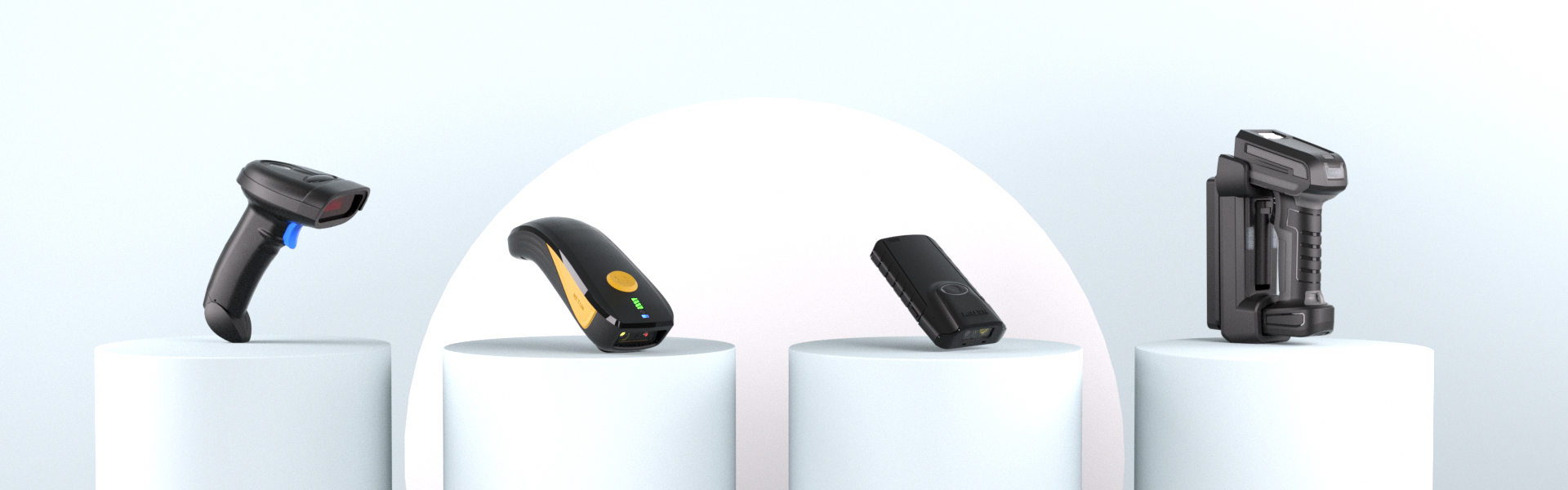
In today’s fast-paced retail, warehouse, and logistics environments, barcode scanners are indispensable for speeding up checkout, inventory management, and asset tracking. Among all scanner types,CMOS barcode scanners have emerged as the most versatile and future-proof solution. In this guide, we’ll explain what a CMOS barcode scanner is, how it differs from laser and CCD scanners, its key benefits, common applications, and how to choose the right NETUM CMOS barcode scanner for your business.
What Is a CMOS Barcode Scanner?
A CMOS barcode scanner (also called a 2D area imager) is a modern scanning device that uses a CMOS image sensor—similar to the camera in your smartphone—to capture high-resolution images of barcodes, then decodes them with advanced algorithms. Unlike laser or CCD scanners that “read” lines, CMOS scanners “take a photo” of the entire barcode, enabling omnidirectional reading and support for both 1D and 2D codes.
Core Working Principle
Capture: A bright LED light illuminates the barcode.
Image: The CMOS sensor captures a full image of the barcode.
Decode: A high-speed processor analyzes the image and decodes the data.
Transmit: The decoded data is sent to your POS, computer, or mobile device.
CMOS vs. Laser vs. CCD: Key Differences
CMOS, laser, and CCD barcode scanners differ significantly in functionality and performance, making them suitable for different business needs:
CMOS scanners support all code types—1D, 2D, mobile screen codes, and industrial DPM codes—with 360° omnidirectional scanning (no precise alignment needed). They read screen codes easily, have no moving parts (for great durability), handle damaged/blurred barcodes well, use less power (ideal for wireless use), and are mid-to-high end in price.
Laser scanners only read 1D codes, require precise alignment for single-line scanning, cannot read screen codes, have average durability (due to internal vibrating mirrors), use moderate power, and are mid-range in price.
CCD scanners mostly read 1D codes (with limited 2D support), need close-range single-line scanning, perform poorly with screen codes, are durable (no moving parts), use more power (not ideal for wireless use), and are budget-friendly entry-level options.
Key Takeaway: CMOS scanners are the only all-in-one solution for modern businesses, supporting every code type and working environment.
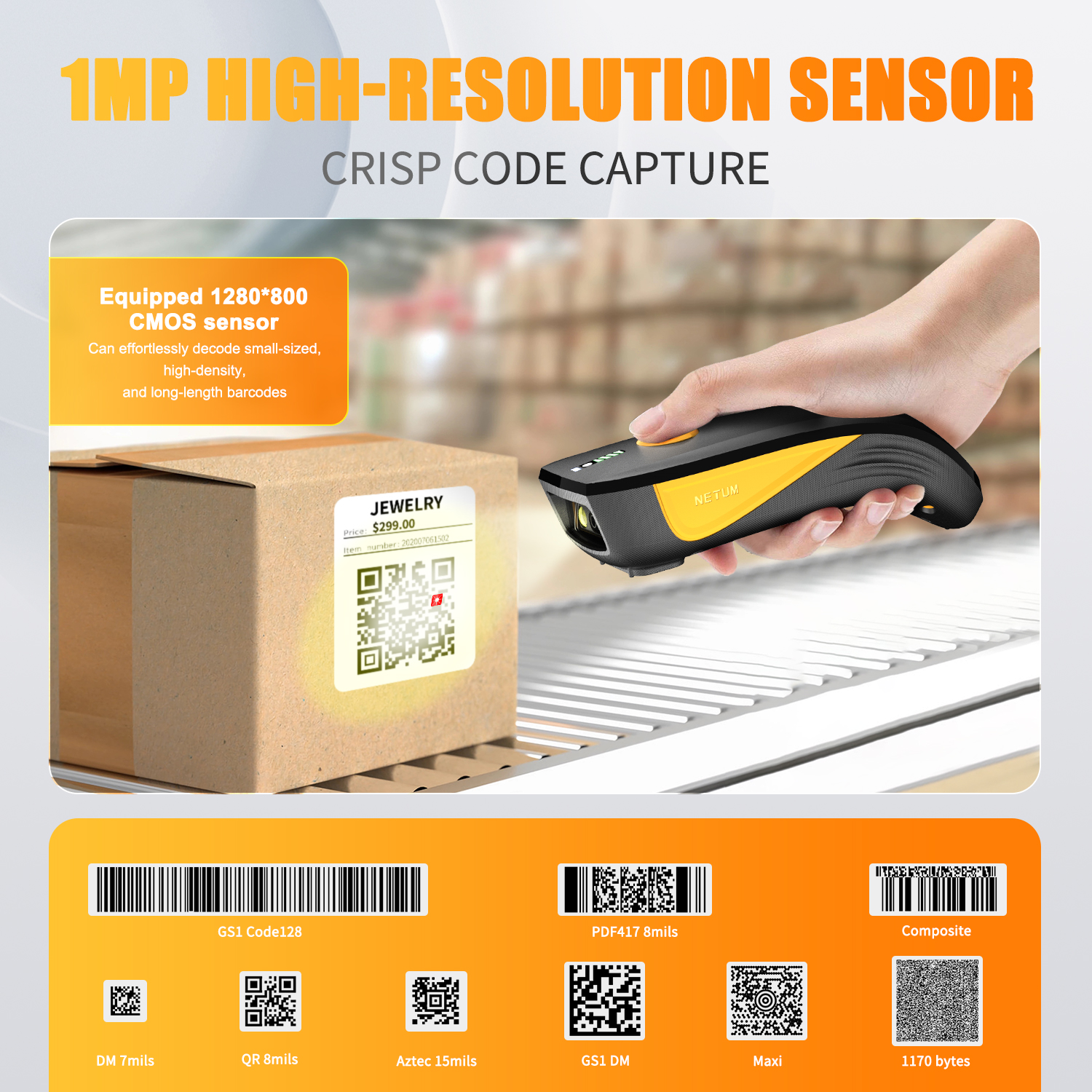
Top Benefits of CMOS Barcode Scanners
Why are CMOS scanners the top choice for retail, logistics, and industrial use? Here are their biggest advantages:
1. Omnidirectional Scanning
No need to rotate or align the scanner—it reads barcodes from any angle (360°). This speeds up operations and reduces user error.
2. Reads Everything: 1D, 2D, Screen & DPM Codes
1D Codes: Code 39, Code 128, EAN/UPC, etc.
2D Codes: QR, Data Matrix, PDF417, etc.
Screen Codes: Mobile payment codes (WeChat Pay, Alipay, Apple Pay) on phones/tablets.
DPM Codes: Direct Part Marking codes engraved on metal, plastic, or glass (industrial use).
3. Superior Decoding for Damaged/Challenging Codes
Advanced algorithms easily read wrinkled, blurred, reflective, low-contrast, or partially damaged barcodes that laser/CCD scanners can’t decode.
4. Rugged & Durable Design
No moving parts mean high shock/drop resistance (up to 1.5m drops) and dust/water protection (IP54). Perfect for busy warehouses or harsh industrial environments.
5. Wireless & Versatile Connectivity
Most CMOS scanners supportUSB wired, Bluetooth, and 2.4G wireless connections, compatible with Windows, Mac, Android, and iOS devices.
6. Fast Scanning Speed
Scan up to 300 times per second for seamless high-volume operations.
Common Applications of CMOS Barcode Scanners
CMOS scanners are used across nearly every industry thanks to their versatility:
�� Retail & POS
Supermarkets, convenience stores, and fashion shops: Scan product barcodes and mobile payment codes at checkout. Libraries, pharmacies, and beauty stores: Inventory management and customer loyalty code scanning.
�� Warehouse & Inventory
Stocktaking, order picking, and shipping: Track 1D/2D codes on boxes, pallets, and products. Cross-docking and logistics sorting: Fast, accurate scanning in high-traffic areas.
�� Logistics & Delivery
Courier and express delivery: Scan shipping labels and QR codes on packages. Last-mile delivery: Mobile scanning with Bluetooth scanners for on-the-go tracking.
�� Industrial & Manufacturing
Automotive and electronics: Scan DPM codes on metal parts and components for traceability. Assembly lines: Track work-in-progress (WIP) and quality control.
��Healthcare
Hospitals and clinics: Scan patient wristbands, medication labels, and medical device barcodes for safety and compliance.
How to Choose the Right NETUM CMOS Barcode Scanner
NETUM, a leading manufacturer of barcode scanners, offers a full line of high-performance CMOS scanners for every budget and use case. Here’s how to select the best model:
1. Determine Your Primary Use Case
Retail POS (Countertop): Choose a hands-free omnidirectional desktop scanner like the NETUM A5. It features a 640×480 CMOS sensor, 360° scanning, and auto-sleep/wake for efficiency.
Warehouse/Logistics (Handheld Wireless): Pick a 2D Bluetooth wireless scanner like the NETUM NT-1228BL. It supports 1D/2D/screen/DPM codes, 3-in-1 connectivity (Bluetooth/2.4G/USB), and a 2600mAh battery for 9+ hours of use.
Mobile/Field Use (Compact): Opt for the NETUM E900, a pocket-sized megapixel CMOS scanner with 1280×800 resolution, perfect for field service and mobile inventory.
2. Key Specs to Look For
Sensor Resolution: 640×480 (entry) or 1280×800 (high-precision for small/damaged codes).
Code Support: Ensure it covers 1D, 2D, screen, and DPM codes.
Connectivity: USB wired (basic), Bluetooth/2.4G wireless (mobility).
Durability: Drop resistance (1.5m+) and IP rating (IP54+ for dust/water).
Battery Life: 8–10 hours of continuous scanning for wireless models.
Final Thoughts
A CMOS barcode scanner is more than just a tool—it’s an investment in your business’s efficiency, accuracy, and future readiness. Whether you’re running a small retail store, a large warehouse, or an industrial manufacturing plant, a NETUM CMOS barcode scanner delivers the versatility, durability, and performance you need.