
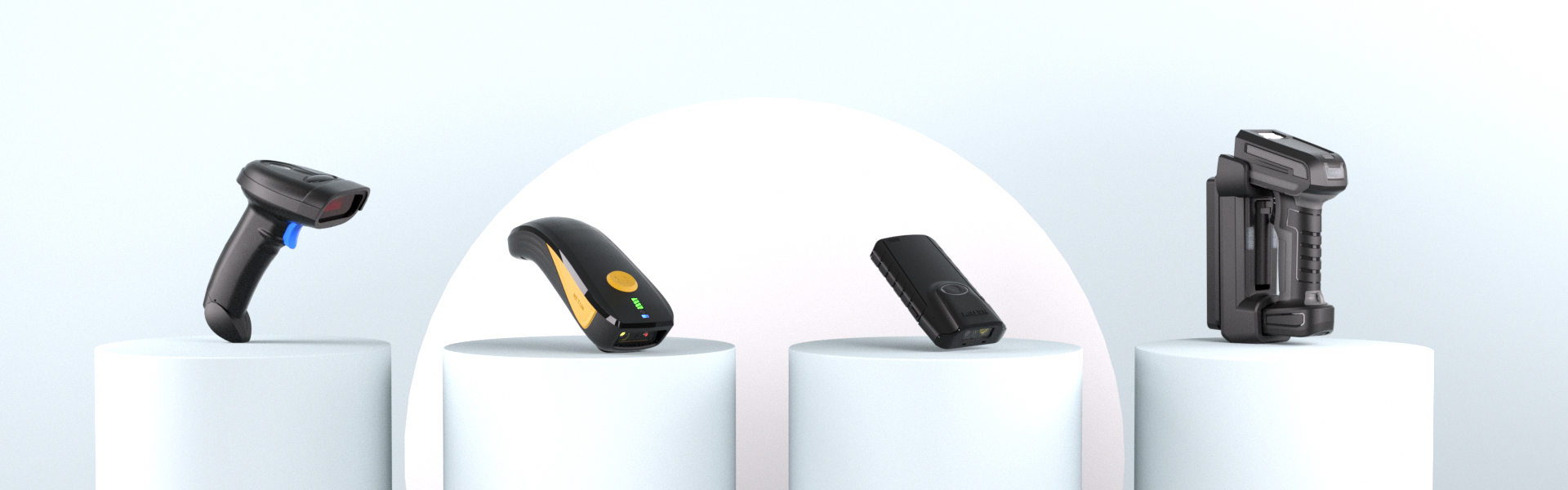
In the dynamic landscape of retail, warehousing, and manufacturing, selecting the right data capture tool is pivotal for operational efficiency. The dilemma between an LED barcode scanner and a laser barcode scanner has long perplexed businesses, as each device caters to distinct needs. To make an informed decision, we compare these two solutions across four core dimensions: scanning distance and depth of field, barcode compatibility and adaptability, durability and maintenance costs, and scanning speed.
Scanning Distance and Depth of Field
When it comes to long-range scanning, the laser barcode scanner takes the lead. Its focused laser beam maintains stability over extended distances, with standard models covering from contact scanning to several meters. Industrial-grade barcode laser scanner units can even read barcodes up to 15 meters away, boasting a depth of field ranging from 30 centimeters to multiple meters. This capability makes the barcode scanner laser an ideal choice for warehouse workers scanning high-shelf pallet labels or forklift operators processing goods without dismounting.
On the flip side, the LED barcode scanner is engineered for close-range applications. Its effective scanning distance typically spans from contact to 30 centimeters, with premium models extending to around 1 meter. Due to the inherent scattering of LED light and rapid light intensity attenuation with distance, its depth of field is limited to a few centimeters to 20 centimeters. For retail checkout counters where cashiers scan items at arm’s length, the LED barcode scanner delivers seamless performance.
Barcode Compatibility and Adaptability
Compatibility is a key differentiator between the two devices. The laser barcode scanner is primarily designed for 1D barcodes and struggles with 2D codes like QR codes. Even with omnidirectional laser technology, the barcode laser scanner requires alignment with the barcode’s orientation to decode successfully. Additionally, it relies on stable laser reflection signals, so damaged, wrinkled, or low-contrast barcodes can hinder its accuracy. That said, the concentrated beam of a barcode scanner laser can penetrate thin plastic films or glass packaging, making it suitable for industrial environments where products are sealed before scanning.
The LED barcode scanner shines in versatility, thanks to its CMOS or CCD sensor technology. It captures full barcode images and uses advanced algorithms to decode 1D, 2D barcodes, and even OCR characters from any angle—no alignment required. The LED barcode scanner excels at reading imperfect barcodes: software enhancement features easily decode stained, distorted, or faded labels, and it seamlessly scans electronic barcodes on smartphone screens. This makes the LED barcode scanner a top pick for retail mobile payment systems and healthcare drug label management.
Durability and Maintenance Costs
Long-term operational costs are a critical consideration for businesses. The laser barcode scanner has a complex internal structure with moving parts like rotating prisms and precision optical components. These parts are prone to wear, misalignment, and damage in dusty, high-vibration industrial settings. The laser diode has a lifespan of only 20,000–50,000 hours, requiring frequent replacements. Combined with higher energy consumption, the barcode laser scanner incurs substantial long-term maintenance costs.
In contrast, the LED barcode scanner features a solid-state design with no moving parts, making it highly resistant to shocks and vibrations. Its LED light source has a lifespan exceeding 100,000 hours, and it consumes far less power than laser alternatives. Maintenance for the LED barcode scanner is minimal—only occasional cleaning or replacement of the optical window to prevent dust buildup. For businesses prioritizing low long-term costs and high reliability, the LED barcode scanner is the clear winner.
Scanning Speed
Speed is a make-or-break factor for high-throughput environments. The laser barcode scanner delivers exceptional performance in fast-paced scenarios, with scanning rates exceeding 1,000 scans per second and millisecond-level decoding. This speed makes the barcode scanner laser perfect for high-speed production lines and conveyor belt sorting systems, such as scanning beverage cans or packaging boxes during mass manufacturing.
The LED barcode scanner’s speed depends on sensor frame rates and processor power. Modern high-performance LED barcode scanner models can capture hundreds of frames per second, matching the speed of laser barcode scanner units for most daily tasks. However, since it needs to capture and process full images, the LED barcode scanner is slightly less efficient than the barcode laser scanner in extreme high-speed applications.
Final Verdict: How to Choose?
Choose a laser barcode scanner (or barcode laser scanner) if your operations require long-distance 1D barcode scanning, high-speed industrial sorting, or scanning through sealed packaging—ideal for warehouses, manufacturing plants, and logistics hubs.
Choose an LED barcode scanner if you need a versatile tool for 1D/2D barcode scanning, close-range retail or office use, and low maintenance costs—perfect for retail stores, pharmacies, and small businesses.
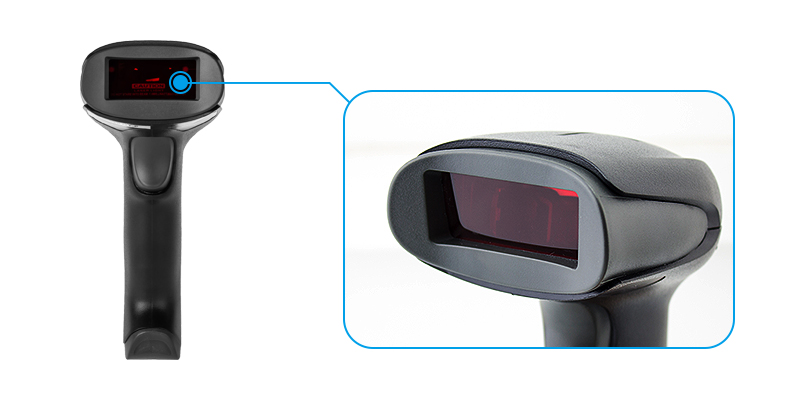
At NETUM, we offer a curated range of LED barcode scanner and laser barcode scanner models tailored to diverse industry needs. Our devices combine cutting-edge technology with rugged durability to optimize your workflow efficiency. Upgrade your scanning system today and unlock seamless data capture!