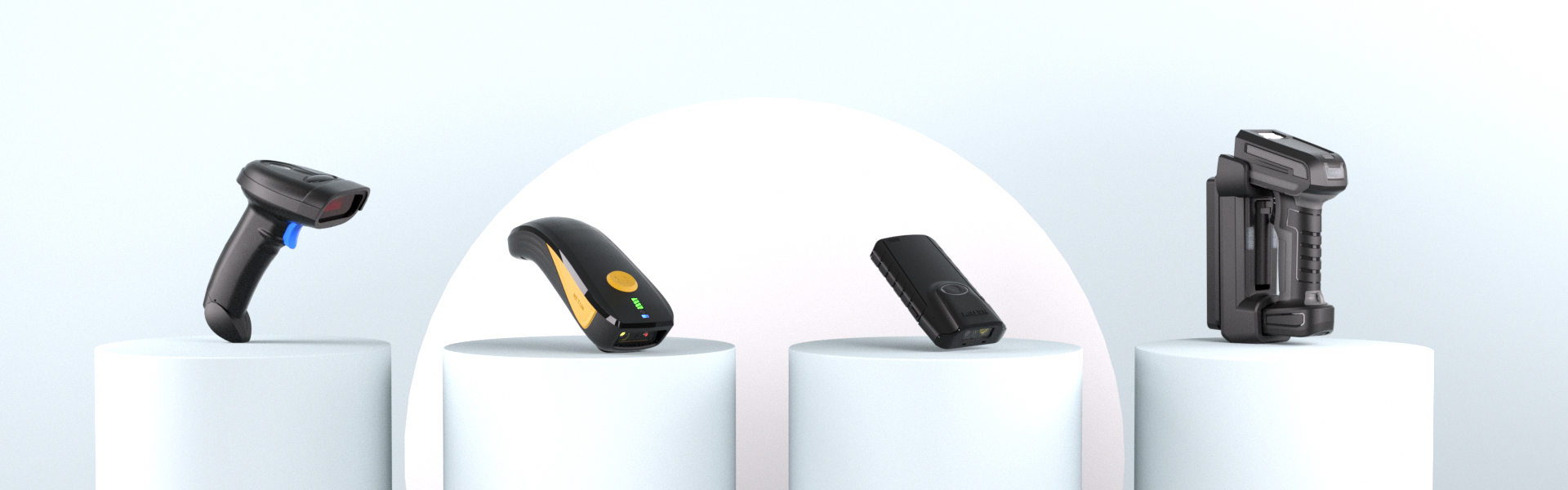
In the fast-paced world of retail, warehousing, logistics, and manufacturing, efficient data capture is the backbone of smooth operations. Barcode scanners have long been a staple tool, but the choice between wired and wireless models remains a critical decision for businesses of all sizes. While wired scanners once dominated with their reliable connectivity, the rise of handheld wireless barcode scanner technology has transformed how teams handle inventory, checkout, and asset tracking. Today, we’ll break down the key differences between wireless and wired barcode scanners, highlight the advantages of wireless options like wireless bluetooth barcode scanner and wireless usb barcode scanner, and help you determine which solution aligns with your business needs.
First, let’s address the limitations of wired barcode scanners. Wired models rely on physical cables to connect to computers, POS systems, or inventory management software. This means your team is tethered to a fixed location, restricting mobility during tasks like warehouse stocktaking, large-scale inventory counts, or curbside pickup checkout. Cables can also become tangled, damaged, or pose tripping hazards in busy workspaces—adding unnecessary downtime and safety risks. Additionally, wired scanners require proximity to power outlets and devices, limiting flexibility in layout design for retail stores or warehouses. For businesses that prioritize agility, these constraints can slow down workflows and hinder productivity.
Now, let’s turn to the game-changing benefits of wireless barcode scanners. The most obvious advantage is mobility: a handheld wireless barcode scanner allows your team to move freely across the store floor, warehouse aisle, or manufacturing plant without being tied to a desk or POS terminal. This is especially valuable for tasks like cycle counting, order picking, or scanning items in hard-to-reach areas—saving time and reducing physical strain on employees. Whether you’re using a wireless bluetooth barcode scanner for seamless pairing with smartphones or tablets, or a wireless usb barcode scanner with a compact receiver for plug-and-play convenience, wireless models eliminate the hassle of cables and unlock new levels of efficiency.
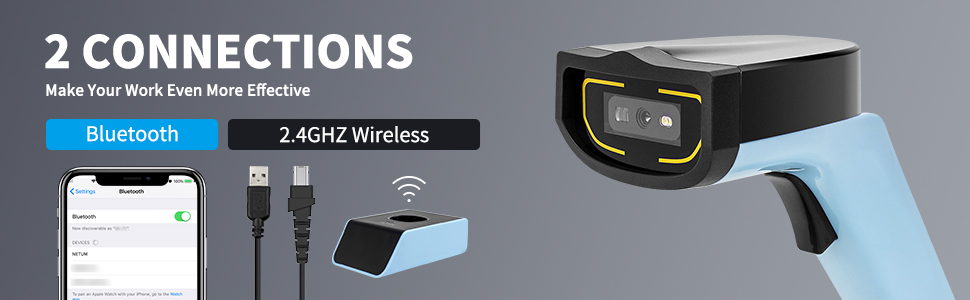
Another key benefit of wireless barcode scanners is their versatility. Unlike wired scanners that are limited to specific devices, wireless options support multiple connection methods to fit your existing setup. A wireless barcode scanner bluetooth model, for example, can connect to iOS, Android, Windows, and Mac devices without extra hardware, making it ideal for small businesses or teams that use mobile devices for on-the-go scanning. For environments where Bluetooth connectivity may be limited, a wireless usb barcode scanner with a 2.4GHz receiver offers stable, long-range transmission—perfect for large warehouses or retail spaces. Industrial-grade businesses, meanwhile, can rely on an industrial barcode scanner wireless model designed to withstand harsh conditions, including dust, moisture, and drops, while maintaining fast, accurate scanning performance.
Accuracy and speed are also areas where wireless barcode scanners excel. Modern wireless models offer high-precision scanning capabilities, reading 1D, 2D, and QR codes quickly even from a distance or at awkward angles. This reduces errors in inventory tracking and checkout processes, minimizing costly mistakes like stockouts or overstocking. Many wireless scanners also feature long battery life—some lasting up to 20 hours on a single charge—ensuring uninterrupted operation during long shifts. For businesses with high-volume scanning needs, this reliability is a game-changer, eliminating the need for frequent recharging or battery replacements.
When it comes to cost, wireless barcode scanners may have a slightly higher upfront investment than wired models, but the long-term savings are significant. Wired scanners require additional costs for cables, cable management solutions, and potential repairs or replacements due to cable damage. Wireless models eliminate these expenses, and their mobility leads to productivity gains that translate to higher revenue. For example, a warehouse using an industrial barcode scanner wireless can reduce stocktaking time by 30-50%, allowing employees to focus on more value-added tasks like order fulfillment or customer service.
So, which is better for your business? If your operations are limited to a fixed location (e.g., a small retail checkout counter) and mobility isn’t a priority, a wired scanner may suffice. However, for most modern businesses—whether you’re a small boutique, a large warehouse, or a logistics company—a wireless barcode scanner offers unmatched flexibility, efficiency, and scalability. Choosing the right wireless model depends on your specific needs: opt for a wireless bluetooth barcode scanner for mobile compatibility, a wireless usb barcode scanner for plug-and-play simplicity, or an industrial barcode scanner wireless for rugged environments.
In conclusion, the shift from wired to wireless barcode scanners is driven by the need for agility, efficiency, and versatility in today’s business landscape. A handheld wireless barcode scanner empowers your team to work smarter, not harder, by eliminating cable constraints and enhancing productivity. Whether you’re streamlining checkout processes, optimizing inventory management, or improving asset tracking, a wireless barcode scanner is an investment that delivers tangible returns. Say goodbye to tangled cables and limited mobility—make the switch to wireless and take your business operations to the next level.